By Cathy Spann, APS Charter Member
In the early 2000s, I had begun taking art classes and experimenting with pastels, and was trying to learn more about using the medium. The Pastel Journal at that time included a section that featured activities of pastel societies around the country, which included a listing for people who wanted to start new groups. In 2003 Mary Ann Stafford placed a notice asking pastel artists to contact her if they were interested in starting a society in central Arkansas, so I sent her my info.
After some time with no further word, I contacted Mary Ann again to ask about her progress with the project. She said she had received several responses, but hadn’t had time to organize a meeting, so I volunteered to contact those responders to see if a meeting could be arranged. Several of us began the discussion via an email group, and the first meeting was held February 2004 at the downtown branch of the Central Arkansas Library. Attendees at the first meeting were: Mary Ann Stafford, Cathy Spann, Carroll Spann, Shirley Anderson, Sheliah Halderman, Lois Davis, Bill Burgin, Dottie Hendricks, JoAnn Knott, Aileen McClinton, and Lakeshia Bell.
At that meeting, we elected the following officers:
Cathy Spann – President
Bill Burgin – VP and Programs
Shirley Anderson – Secretary
Lois Davis – Publicity
Dottie Hendricks – Treasurer and Membership
Mary Ann Stafford – Education
After that first meeting, we moved our meetings to the conference room at the Wild Oats Unlimited store in Little Rock. Our early meetings were primarily concerned with establishing the society, such as defining by-laws and creating a mission statement, but programs including demos were soon added to the schedule. Presenters for 2004 meetings included Mary Ann Stafford, Carole Katchen and Barry Thomas. By April 16, 2004, we had 20 members, 35 by October 2005, 64 by October 2007, and membership has generally averaged in the 60s ever since. APS joined the International Association of Pastel Societies in 2006. Shirley Anderson took on the demanding job of establishing non-profit status for the organization, while Lois Davis created and maintained our first webpage.
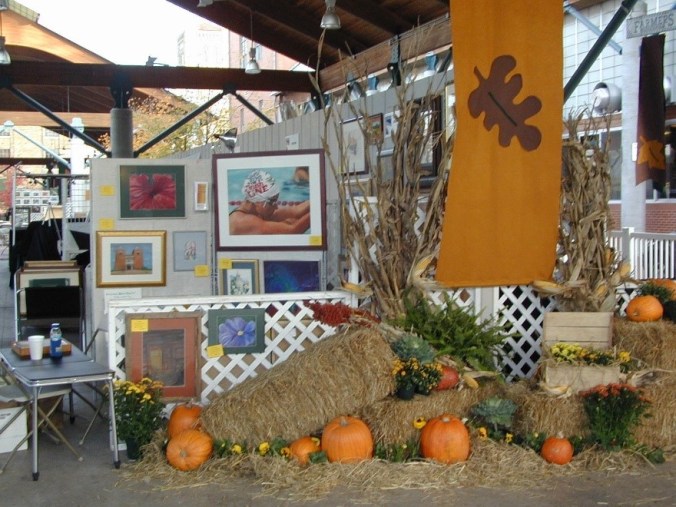
The very first APS show was a booth at the Little Rock River Market in a show that was part of the Clinton Presidential Library opening day activities, November 2004. It seemed like a good idea at the time, but unfortunately the weather was cold and wet that day, and virtually nobody came to the River Market.
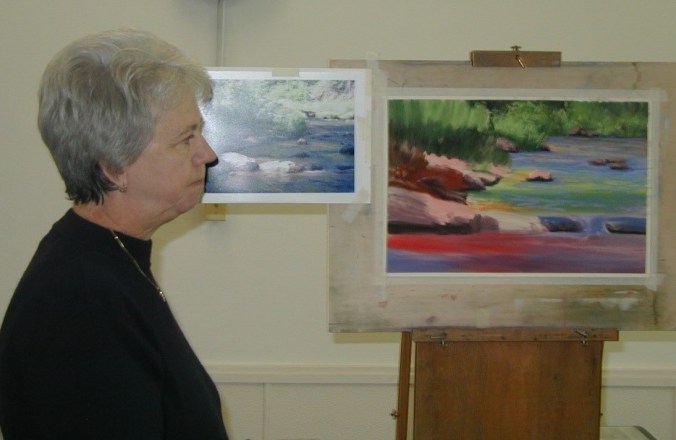
During our second year, at Bill Burgin’s suggestion, we decided to sponsor a National Show, which was held at the Decorative Arts Museum in Little Rock. Maggie Price (pictured below) was the juror and leader of the associated workshop. She was extremely helpful in providing tips on how to be a successful pastel society. A week before the show, I was concerned that there would not be enough entries; the last week entries flooded in. That’s when the reality of dealing with artists hit, they wait until the last minute!
Mary Ann was responsible for arranging our first workshops and national show jurors: Maggie Price in 2005 and Kitty Wallis in 2007. Other early workshop presenters were Doug Dawson, Albert Handell, Richard McKinley, Sally Strand and Susan Ogilvie.
We have continued to hold a juried national show every two years, and a members-only juried show in alternate years, plus a variety of member shows along the way. We have at least one national-level workshop every year, plus others with a regional focus. We’re also finding ways to share educational opportunities with the community, such as LifeQuest and Seis Puentes.
It has been amazing to see all we have accomplished these past twenty years, even things that took a long time, and a variety of people, to bring to fruition. I can remember sitting in that cold River Market in 2004 talking to Jodie Taylor, from the Ozark Pastel Society, about the possibility of doing a joint show between our two societies. Various people talked about doing that through the years, and investigated the possibilities, but it took the appearance of an intermediary between our two groups, Charles Peer, in collaboration with Caprise Cooper, to make that happen. But everyone who helped keep the idea alive was ultimately part of the process.
 Arkansas Pastel Society